
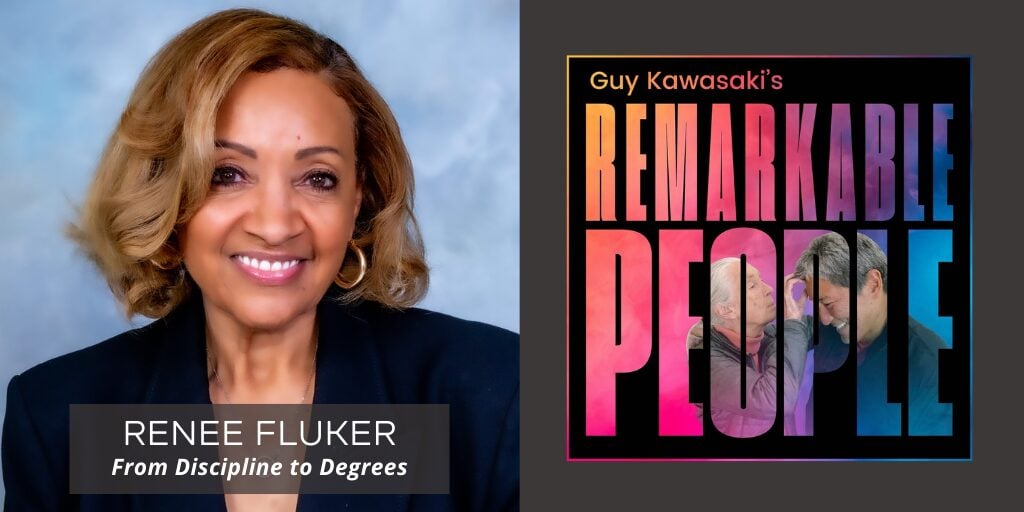
Welcome to Remarkable People. We’re on a mission to make you remarkable. Helping me in this episode is Renee Fluker.
Renee Fluker is reshaping what opportunity looks like for young people in Detroit. As the creator of the Midnight Golf Program, she has spent 25 years teaching students not just how to swing a club, but how to show up—with discipline, confidence, and respect. Her work has helped more than 3,000 students move from uncertainty to college acceptance, often against overwhelming odds.
In this episode, we explore how Midnight Golf grew from 17 students meeting for food and golf into a nationally respected model for mentorship and college preparation. Renee explains why soft skills matter just as much as academics, how structure creates freedom, and why she refuses to lower expectations—even when society does. Her stories are candid, sometimes tough, and always rooted in care.
We also talk about leadership, sacrifice, and what it takes to sustain a mission for decades. Renee shares the personal cost of building something that lasts, the lessons she’s learned along the way, and why passion without commitment isn’t enough. If you’ve ever wondered what real impact looks like, this conversation makes it unmistakably clear.
Please enjoy this remarkable episode, A Proven Path to College for Detroit’s Youth with Renee Fluker.
If you enjoyed this episode of the Remarkable People podcast, please leave a rating, write a review, and subscribe. Thank you!
Transcript of Guy Kawasaki’s Remarkable People podcast: A Proven Path to College for Detroit’s Youth with Renee Fluker.
Guy Kawasaki:
Hello everybody. I'm Guy Kawasaki. This is the Remarkable People Podcast, and we scour the world looking for remarkable people, and we found one in Detroit, Michigan. Her name is Renee Fluker, and she is the creator of this really innovative and such a great service.
It's called the Midnight Golf Program, and I will let her explain how this works. She's a former social worker, and she truly has a gift in seeing the potential in people, and she's helping thousands and thousands of students in the Detroit area gain a better life and change the world. So welcome to the show, Renee Fluker.
Renee Fluker:
And thank you for inviting me to be on your show.
Guy Kawasaki:
First of all, please explain what the Midnight Golf Program is.
Renee Fluker:
Okay. So in 2001, my son was going away to college, and his dad died in a car accident. And so I wanted to do something, and I didn't wanna do anything. And he said, “Mom, go back and start a golf program so inner city kids can learn how to play golf like me.” So I listened and got some people together and I started with seventeen students in public housing in Detroit, Michigan.
So I went knocking on doors and begging kids to come and play golf. And one young man pushed me off the stairs and say, “Look lady, I don't wanna learn how to play those sticks.” And so I'm like, okay, I'm gonna try something else. So I went back and told some people, I said, “I gotta try something else. Let's try food.”
So I said, “Okay.” I went back again and said, “We got food at the community center,” and all these young people came to the community center to get pizza. And that's how it got started with the food. So we started with seventeen students learning how to play the game of golf. We did not think about college at that time.
Then eventually we started getting more people, kids wanna be in this program. So we said, “We gotta add something to it.” So we decided to add a life skills. You need life skills and soft skills to get you prepared to go to college because we wanna make sure now kids can go to college.
Well, it worked. Again, I had to have the food so my speakers would come and bring food because again, I didn't have any money. I borrowed money off of my 401(k) when I first started this program twenty-five years ago, and I know food was a very important thing that we had to have.
And so that's how it got started because of Jason saying, “Ma, go back and let other young people learn how to play the game of golf.” And it left from golf to college, from college to weddings, to bridal showers. You name it, we do it.
Guy Kawasaki:
So now like, will you describe what happens in a typical, you know, weekday meeting like how much is counseling and, you know, peer-to-peer advice and communication? How much is eating and how much is hitting golf balls?
Renee Fluker:
We have two cohorts now. Like I said, over 250 students, so we had to break them up. So 135 to 138 students come on Monday, Wednesday, the same for Tuesday, Thursday. So when they get here five-thirty in the evening, we have a speaker, a different speaker twice a week. So we gonna be doing thank you cards in the next two weeks.
Our students don't know how to write. They don't know how to address the envelope. They don't know where to put their name or who are they sending it to, so we have to show them. We gotta show them what color ink to use. We do dinner etiquette. They don't know how to cut their chicken or drink coffee or soup or whatever.
We teach them all those soft skills that they need to learn how to do before going away to college. And so the name, Midnight Golf, came from Midnight Basketball. We were gonna do a partnership with Midnight Basketball, but we didn't like what they did. All they wanna do was stay up all night and play basketball, and they thought we could play golf all night.
That did not work. So we end up leaving Midnight Basketball having Midnight Golf, but we've rebranded our program to College Career and Beyond | Midnight Golf Program, so everybody know it’s getting our students into college, and we have to figure out a way to keep them at college.
Guy Kawasaki:
So how many students have been through your program so far?
Renee Fluker:
So we had over 3,000 students. And again, when they come during the week, five-thirty in the evening to eighty-thirty in the evening, we have a speaker. And then from six-thirty to seven in the evening, I have a full course dinner, not pizza. We have baked chicken and a vegetable, a starch, and they like different types of bread and butter, you know, rolls.
And then after that, they break up. Half will go get golf lessons for thirty-five minutes and the other half break into these small groups called Tee Time, where we gotta discuss why is this so important to write a thank you card? Why is it so important to do this dinner etiquette? We teach them how to do neck ties.
We teach them how to do bow ties. So we have a thirty week program with thirty to forty-some people coming in teaching these different etiquettes.
Guy Kawasaki:
Now I read someplace, and correct me if I'm wrong, but every one of your graduates went to college. Is that still true?
Renee Fluker:
97 percent went to college this year. We just completed our class of 2024-2025. 97 percent went to college.
Guy Kawasaki:
Wow.
Renee Fluker:
Yeah, and we are doing care packages, so all 200 of those students will receive a care package at the different colleges. We work with over a hundred colleges. And this year we got even more, and then I have eighty different high schools that we work with.
So we have schools from everywhere for like far as forty-five minutes to fifty-five minutes for a student to get here.
Guy Kawasaki:
Now, don't you have like for every available seat, you have ten applicants, right? So it's like ten to one, right? So now how do you decide who gets accepted?
Renee Fluker:
Yes. So our mentors, we have sixty mentors. Out of that sixty, twenty are Midnight Golf alums. So they done went to college, they got jobs, and now they’re coming back and they wanna be a mentor. So they decide. I don't have anything to pick anybody. My staff don't. The mentors make all the decision.
They go by the grit, motivation. We don't go by GPA. We don't go by SAT, ACT scores. You gotta show us that you wanna be a part of this program. And the interview is about twenty to twenty-five minutes and the interviews we start on a Tuesday, and we're done Thursday night for 900 people.
Guy Kawasaki:
Wow. So I read some place that, you know, one of your dreams was to get a building. Have you gotten a building and set it all up yet?
Renee Fluker:
I got the building. So a sponsor donated this old TV station in Midtown Detroit. It used to be Channel Fifty-Six. And we got a loan from the Jewish Federation Center for twelve million dollars. And we renovated this building, and it is beautiful. You have to come see it. It is just beautiful. We have one floor, the basement.
It's like a PGA, it's four simulators. Putting, chipping, all of that. First level is where we do programming. And the second level is our offices. We used to have to go to a school called Marygrove College. And we would have to tear everything down every night, come back every day and put it together.
And then one of my sponsors said, “I wanna give you this building.” And I'm like, “Oh, okay. Alright.” But when I walked in, I'm like, “Oh no, they can't do nothing with this building.” It was like, if you could see the pictures, it was terrible. And now it's like, is that the same building? So, yeah, we need funding so that we can, you know, we gotta pay this loan back. We have to pay it back.
So I'm begging people to come see what we're doing and I'm trying to help people to become like productive citizens, but I want them to be better, you know. They don't have to be like me but be like you wanna be somebody and come back and give back.
I gave half of my life to this program. I've been doing this twenty-five years, and now eventually, one day I'm gonna have to leave and I want the program to be sustained. You know, like I want everything to be in place. I don't wanna walk away and it's not ready, you know? I worked too hard to put this together.
Guy Kawasaki:
How big is your staff now?
Renee Fluker:
We got fourteen staff people. Our building is 40,000 square feet.
Guy Kawasaki:
Wow.
Renee Fluker:
And it's like, you know, how you wish, and you keep dreaming that something would come true, and it came true.
Guy Kawasaki:
Wow.
Renee Fluker:
It came true, and we could get the chance to serve more students. And remember, these are all high school seniors. All high school kids and people say, “Well, they should know where they're going to college.”
We have kids that don't know they're going to college until July. We have kids with a one-point-nine, one-point-eight saying, “I won't be able to go to school.” We get them in college. We find colleges that will take them, and they end up that next year with a three-point-four or four-point-zero.
Guy Kawasaki:
And how do these kids then pay for four years of college?
Renee Fluker:
Financial aid. They do scholarships. They take loans. They take the loans to the max. I have one of my students who was in the program in 2007, she's a lawyer and she's still paying 200,000 dollars back that she borrowed at Michigan State.
She said, “I guess I'll never pay this off.” But she's a lawyer and you know, that's our dream to have our young people to go to school and get a degree and find a good job.
But, you know, we don't know what's gonna happen now because the student loans and education, you know, you don't know what's gonna happen. Where they gonna get the money? What happened to the Pell Grants? Will they still be around? That's my concern because if they don't get financial aid, they can't go to college.
Guy Kawasaki:
So you know, all politics and rhetoric aside, what do these kids need to succeed?
Renee Fluker:
They need love. They need somebody to care about them. They need a strong person. You know what happened to the days when we were coming up and we had people that could talk to us and can listen? Like with Midnight Golf, they have to call the mentors, Mr., Ms., or Mrs. You can't call them by their first name. Nobody in my building is called by their first name.
And people got away from that. So when they come in, they gotta say, “Okay, yes ma'am. No ma'am. Or no, I ain't gonna do this.” No, we don't talk like that in Midnight Golf. And I think it helps them when they walk in the door.
We give all our rules. We have a lot of rules. We even tell them, you know, you can't come in here wearing blue jeans. We don't do blue jeans. You gotta wear nice pants. If you don't have them, we will give them to you. Your boys gotta have their shirts tucked in. They gotta wear a belt. Girls can't wear bonnets on their heads.
Everybody's gotta look like you're going to play golf. Boys can't wear hats in here. And we just trying to prepare them for the real world. And half of them don't even get that kind of information going to school. So when they see that we care and I'm standing at the door every night. Oh, I give out 200 hugs. “Ms. Renee, can I call you? Can you do this? Can we do that?”
That makes the mentors and myself, like we are doing something for the world, and we trying to help people to be like, again, be great and don't do anything that you won't regret.
And I always tell them, I say, “You know what, Ms. Renee don't do babies. Now when you go to college and get a degree, get married or whatever, that's your business. But right now, if you come up here and you say you having a baby, I'm sorry, I gotta help that person that wanna go to school.”
And so last week, one of my alums, she was in the program in 2006. She got married and she said, “Ms. Renee, I’m gonna have a baby.” She said, “But I'm married.” I'm like, “Okay, but you grown and you got a degree and you got a great job. That's okay.”
But right now when you trying to go to school, you can't take care of baby. You can't do that. And they said, “Well, my mom, my family never says that.” Well, I'm gonna say that. I'm old school. I come from the old school and as long as I'm around, we gonna always have my old rules. Do you think there's something wrong with that?
Guy Kawasaki:
Do I?
Renee Fluker:
Uh-huh. Do you think there's something wrong with rules?
Guy Kawasaki:
Oh, not at all. Listen, Renee or ma'am, I probably like rules more than you do, so yeah.
Renee Fluker:
But yeah, we do a lot with our young people with rules and how you dress and how you talk to people, how you greet people, how you shake their hands. We even tell them when you go to college, sit in the front row. Don’t sit in the back and on the first day, they'll send pictures, “I'm sitting in the front row.”
Okay, good. Keep sitting in the front row.
Guy Kawasaki:
So, you know, I know that you must have answered this question of 15,000 times, and you probably can even guess what the question is gonna be, but I really want your take on this, like why golf? Well, golf is the whitest sport there is, right?
Renee Fluker:
It is.
Guy Kawasaki:
Like Donald Trump plays golf.
Renee Fluker:
Ah. But you gotta remember, our kids, African American kids, Brown kids, all they know is football and basketball. Everybody thinks they're going to the NBA, but once we put that golf club in their hand, oh my God, you should see them. Oh, the last two weeks we've been outside hitting golf balls. It's amazing.
It is amazing to see young people so excited about hitting the golf ball and we wanted to show there's more than just basketball and football. And the young man I was telling you about that pushed me down the stairs. He got married, that was in 2000. He got married and his daughter was in my program last year.
Guy Kawasaki:
Wow.
Renee Fluker:
So isn’t that something? They're getting married, and they got kids and now their kids are coming back through the program.
Guy Kawasaki:
All right, so I suspect of all people in the world, you know what makes a good mentor. So what makes a good mentor, Renee?
Renee Fluker:
Well, I think what makes a good mentor that person is not your friend. That person can be there to give you some advice to guide you alone, but not to be your friend. Just like some parents think that they're their kids' friends.
No, we are here to give you support, to give you wisdom, to be there when you're going through hard times, or give you some suggestions on what you should do in your career, but I just don't think a mentor could be your friend.
And we always make that clear in our mentor sessions when we have training, they're not your friends. And we do have young people. We start at the age of twenty-five. Our oldest mentor is eighty-four. And, we try to explain to the mentors, you're not here to be their friend. And they understand that.
Yeah, we do have an eighty-four-year-old and he is an avid golfer. He retired from General Motors, and he loves coming. It's something for him to do because he could just be sitting at home doing anything. But he comes and the kids love him. They call him Mr. Mack. “Hey Mr. Mack.” And he just grins and talk and laugh and he's like their grandfather.
Guy Kawasaki:
Wow. So listen, as you look back over the twenty-five years you've done this, what would you do differently? What did you learn? That anybody who's starting a program to help kids could learn from you, so they don't make the same mistake. At least they should make different mistakes. So what's your advice to someone like that?
Renee Fluker:
You gotta have dedication. You gotta have time. I gave up my personal life to do this program. And if you don't have the patience and the time and the commitment and the financial and the money, it's gonna be hard. But you gotta give it all that you have. You gotta have that passion. You gotta be motivated.
I remember when I first started Midnight Golf, it was just me. In 2001, it was just me. I did the grants. I did go to meetings. I'm recruiting kids. Plus I had a full-time job with the state of Michigan, and I was selling neck wear for Kenneth Cole, and I was traveling. So I got two or three hours of sleep in the beginning.
And I just had that, I don't know. I just had it. I couldn't sleep. I was excited and then I would hear people tell me, “No, I can't give you any money. You just started this program.” But when I got my first grant, I was so excited and I went back to those people and say, “Look, I got my first grant. Now, can you take consideration and take me back and let me apply again?”
But I just want people to realize it's not easy. It's not easy, but it's something you gotta be passionate about. You gotta just have the motivation and just willing to learn and learn from other people.
Guy Kawasaki:
Renee, I gotta say that I am just so thankful that there are people like you in this world, man, because I mean, truly, you are making a difference. You know, you're not about crypto or long-term capital gains tax or anything like that. You are really, you are truly making the world a better place. Wow.
Renee Fluker:
And I think about all the years, and I think about everything I've done. I even go to the colleges. I didn't even tell you this. I go to the different schools and see students sometimes when they are having some issues. I jump on the airplane.
I'm there for them. But it just give me hope that it's still good people in the world and it's still somebody who care about me. I got some angels somewhere around here that care about me because I'm still doing it.
Guy Kawasaki:
Wow. So Renee, what if a kid comes to you and you know that kid is angry and skeptical and untrusting? Well, first of all, I don't know if such a person would get into your program, but let's just say that happens.
Renee Fluker:
Oh, it happened.
Guy Kawasaki:
Okay, so what do you do in that kind of case?
Renee Fluker:
So a young man came to Midnight Golf, and he was talking while the speaker was talking, he kept talking and talking, you know, trying to be funny. You know how you wanna get some attention. So he kept talking and interrupting the speaker. So I went over to him, and I said, “Get the F outta my class.”
Oh, everybody did like, “Ms. Renee cussing. Ms. Renee is upset.” I said, “Get up, get out now. Get out.” So he got up, he walked out the door and somebody came and got me. He was on the stairs at the school where we were at, crying. And I went and sit on the steps with him, and I said, “I really didn't appreciate that.”
I said, “I never lost it with anybody. You're the first person.” He said, “Ms. Renee, I'm so sorry. I am so sorry.” I said, “I need you to go back in that room and apologize, and then I want you to leave and I gotta think about if I want you to come back.” He came back. This young man, I mean, is totally different.
But he was just used to being a class clown, you know, just being funny and talking, and I just got tired, and I lost it. First time I ever done that. But over 3,000 kids, that was the first time that ever happened.
Guy Kawasaki:
And I bet that story is Midnight Gulf lore.
Renee Fluker:
Oh, and his brother was in it. And his brother, we still talk about it when I see them, but you know, it's like you being disrespectful. These people left work to come here to give you these skills and you gonna sit here and be disrespectful? No, not in my class. Not in this class, you're not gonna do that.
Guy Kawasaki:
So Renee, I can't tell you that I am familiar with all these issues you're dealing with and all that. I'm from Hawaii. I live in California. I'm seventy-one years old. So just for me and the people listening who are kind of similar to me, what are things that we always get wrong about at-risk youth and the kind of youth that you're dealing with that, you know, just demystify this for us.
Renee Fluker:
Well, I think people get the wrong impression when you see kids out walking around and they on their phones. They stay on the phones or either they walking around, they pants hanging down. They talking all crazy and I think they get the wrong idea that they're bad kids.
But I think they just need somebody to listen and someone to tell them, “This is how you should be acting when you out in the public.” I can go somewhere right now and see some kids on the corner, and I don't like what they saying, and I shouldn't say anything to them, but I do. And they say, “Oh, you, that lady in that Midnight Golf Program down the street.”
“Yeah, I'm the lady down there.” “Okay. We won't do that.” But, you know, some kids you can't say anything to, but I try with my students and with their siblings. This is not the way we're going to act at this program. Or you should tell your friends they shouldn't be like this either.
So I don't know if it works, but so far. Again, like I said, kids are coming here, or they have to tie their shoes. That's another thing. Young people don't wanna tie their shoes and we have stairs. You gotta go up and down and I don't want anybody to fall or trip. So when they walk in the door to check in, we check their outfits.
You gotta tie your shoes if you don't. Some kids don't even know how to tie these shoes. I have videos where I have to show them how to tie their shoes. Now are you seventeen, eighteen years old and you don't know how to tie your shoes?
So I get down and I show them how to tie their shoes. They take the shoestrings and stick them in the side of their shoes, and they don't tie them, and their shoes go up and down. So I'm like, “No, not in my building. You are seventeen years old and don't know how to tie your shoes.”
Guy Kawasaki:
Wow.
Renee Fluker:
You'd be surprised in some of the things we find. And now we got a thing where all the boys are wearing their hair in braids, and they’re covering their eyes. So I told them last week, I said, “I bought these little rubber bands,” and I said, “I need you to tie your hair. I need to see your face. I need to see your beautiful eyes.”
“Well, that's the style.” “We're not in here. That's not the style. If you don't like it, you can leave.” And they put that hair back. But that's the thing. Everybody wanna have their eyes like, “Lemme see your beautiful eyes. Why are you doing this to me?” “Okay, Ms. Renee.”
Guy Kawasaki:
My God, what a force of nature. When is there gonna be like the Renee Fluker movie here?
Renee Fluker:
Can you get us started please? I wanna write a book. I really wanna write a book. I wanna tell my story so that other people might have a different idea. They may wanna do tennis or they may wanna do art, you know what I'm saying? Or they wanna do something. But I think if they can hear what I'm saying that you can do it.
If you believe in it and you can touch it and you motivated, then you can do it. But you gotta feel it, and I feel it every day of my life. I feel this program and I missed out on my life just because of Midnight Golf. I'm not married, so what's going to happen? Who's gonna take care of me in the next twenty years, ten years?
You know, I'm gonna be all by myself and all my Midnight Golf kids, like the old lady in the shoe. Well, all those kids, she didn't know what to do.
Guy Kawasaki:
You know, Renee, I kind of doubt that you are gonna be alone in the next twenty years. I just don't see that happening, Renee. You're a ray of sunshine. It's not gonna happen that way.
Renee Fluker:
I hope not. Like I said, I've gave this program my life. Like sometimes when I did a speaking engagement this morning at Michigan State and I got kind of choked up at the end, and somebody said, “Have they started on your succession?” And I'm like, “Yeah, we got a committee. They got a committee going. But I'm not ready to leave. I still got a little bit more in me.”
Guy Kawasaki:
Wait. No. All right. So like, let me get this straight. Somebody asked you about your succession plan?
Renee Fluker:
Yeah.
Guy Kawasaki:
And you are, you said fifty years old?
Renee Fluker:
No, I'm seventy.
Guy Kawasaki:
Oh, but you look like you're fifty all right, so what can I say.
Renee Fluker:
Yeah, I'm seventy. I'm like you. I'm in your category.
Guy Kawasaki:
It's lonely at the bottom. I don't know.
Renee Fluker:
So yeah, I'm just saying I just wanna continue to do what I'm doing for right now.
Guy Kawasaki:
Well, I know some people who are nine or ten years older than you who are running some bigger things too. So, you know, seventy is the new fifty-five, let's say.
Renee Fluker:
Yeah. I like that. I like that because I'm sure people wanna know how this program get started. Why are we doing it? When do you do it? And how often do you get new kids? But again if I could just tell my story and how all this got started. It was not easy. This was not easy.
It was not. But working all those jobs and I had great people behind me to support me and show me I could do it, but a guy told me today he's trying to do something with Japanese kids, but it's hard. And I said, “No, you can't do that. Just think about it. You gotta do this and do that.”
And you know what he said, “Oh, I love your advice you gave me.” I said, “You gotta go start a 501(c)(3) and you have to do it. You don't have no choice if that's what you like doing.” And I talked to him for about thirty minutes and took notes and he said, “Oh, I'm gonna try, I'm gonna do this.”
He speaks Japanese and he wants to start a program for kids that came from Japan.
Guy Kawasaki:
You know, I hope that someone listening to this episode gets moved enough to start helping you.
Renee Fluker:
I do too.
Guy Kawasaki:
Wow.
Renee Fluker:
I just wish that I had a fairy godmother that can come in here, so maybe I could take more kids. I can take juniors. I really wanna do a pilot program with juniors. Maybe they don't come twice a week. They come once a week, but get them prepared to become a senior, and it takes money. It takes a lot of money.
My food bill is about 25,000 to 30,000, 35,000 dollars a month when I have a full month. And again, I feed the kids, I feed the mentors, and I feed the PGA guys because you're here from five-thirty in the evening to eight-thirty in the evening. That's dinner time. And we want everybody to be happy.
Guy Kawasaki:
Well, you know, if you're listening to this episode and you are moved by this story, I mean, here's a call to action, right? Go to your browser and type in “Midnight Golf Program” and you'll easily find Renee Fluker at our program. And this is a way you can really help make the world a better place.
There's no doubt in my mind here. So Renee, I just wanna thank you for being on our show. This is really inspiring and from the bottom of my heart, I wanna thank you for what you're doing to make this a better life for all these kids. It's really a noble thing that you're doing.
Renee Fluker:
Well thank you and thank you for listening to me and I hope your listeners will take the opportunity to look at our website. And again, they can do “MidnightGolf.org” or they can do “CollegeCareerBeyond.org” and it tells the story in my website, and you can hear videos and you can see pictures and you can see everything we are doing.
We are in the process of two things happening. One, we have that sustainability where we are trying to raise money for the building. And so you can get your name on the building or room or office. And we are also getting ready for a college tour in March, and we're going to Savannah, Charleston, and Charlotte.
And a lot of our students have never been outside of Detroit. So we have six buses, four Embassy Suites hotels, eight colleges, four golf courses, and we need funding to do all these things.
Guy Kawasaki:
Wait, so you and these kids that you just jump in six buses and off you go on a college and golf tour.
Renee Fluker:
Yes. We've been doing it for twenty years. I started with one bus and now I'm at six buses. They said, “Well, you should go to eight.” No, I'm not going to eight buses. On a bus, we have nine mentors and forty-five kids, or between forty, forty-five kids. So we have a fifty-two passenger bus. And I always tell them, “Ms. Renee do everything first class.”
So we have new buses. I go to the bus company, and I fuss with them. I have to have new buses. We on a bus for fourteen, fifteen hours. I'm on that bus. We have to have new buses. The hotels is Embassy Suites. That's a hundred thousand dollars. You know, there's three people in the room. I do not put two kids in a bed.
They have to be in their own beds. And then we do a dinner that Thursday night, a dress-up dinner and we have it like at a country club or a private club, and it is something that they would never forget, and they still talk about it from 2005.
Guy Kawasaki:
Wow. That is a great story. That is the way to end this episode. That is a great story. Thank you very much, Renee Fluker.
Renee Fluker:
Thank you. Thank you. Thank you.
Guy Kawasaki:
Let me take a minute or two and thank the rest of the Remarkable People team. And that would be Madison Nuismer, co-producer, with Jeff Sieh, co-producer, Tessa Nuismer, researcher, and Shannon Hernandez, who is our sound design engineer.
So that's the Remarkable People team, and I encourage you one more time to go and look at the program that Renee has created, and you will definitely be helping something that's making the world a better place. Thank you, Renee.
Renee Fluker:
Thank you.
Sign up to receive email updates
Enter your name and email address below and I'll send you periodic updates about the podcast.

Leave a Reply